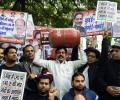
The rate of price rise for food articles stood at 11.51 per cent during January as against 2.41 per cent a month earlier, while for non-food articles it rose nearly three-fold to 7.8 per cent from 2.32 per cent in December, the data released by the ministry of commerce and industry on Friday showed.

Voting for the 2014 general elections will begin in April and it is expected Budget 2014-15 will be presented in June.
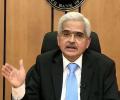
With inflation under control, the Monetary Policy Committee's (MPC's) job is to support growth because the economy had recovered well from the lows in the initial months of the pandemic, according to the panel's members, who met in the first week of this month. The minutes of the meeting show the Reserve Bank of India (RBI) governor in his statement said: "Given the sharp moderation in inflation along with a stable near-term outlook, monetary policy needs to continue with the accommodative stance to ensure that the recovery gains greater traction and becomes broad-based." Ashima Goyal, external member of the MPC, said: "The current macroeconomic configuration and its expected future evolution imply there is space for the MPC to continue to support the revival of the economy with inflation remaining in the target band."

Investors saw their wealth rise by more than Rs 3.96 lakh crore on Wednesday as stocks continued their rally for the second straight session amid the Reserve Bank reiterating its accommodative stance and easing concerns over the Omicron variant of the coronavirus. The 30-share Sensex soared 1,016.03 points or 1.76 per cent to close at 58,649.68 and all the constituent stocks, except for two, closed in the green. Most of the rate-sensitive auto, banking and realty stocks registered gains during the day's trade. While the BSE Auto index rose 2.24 per cent, BSE Bankex went up 1.61 per cent and BSE Realty spurted 1.72 per cent.

After Raghuram Rajan leaves, the world for the succeeding RBI governors will be distinctly different.

'Normally, the system is geared towards counting notes -- it is equipped to do x amount of work and one day you are asking them to do 20 x.' 'The processes involved are very complex.'

Leading economists have pencilled in a high 13-15.7 per cent uptick in the economy in the first quarter of 2022-23 with an upward bias. Soumya Kanti Ghosh, the group chief economic adviser at State Bank of India, on Tuesday said he expects the GDP to clip past 15.7 per cent in the first quarter with more chances of the final numbers printing in higher, while Aditi Nayar, the chief economist at the rating agency Icra, said the economy will grow much lower at 13 per cent in the June quarter. The national statistical office will announce the first quarter GDP numbers later next week.

The committee set up under Urjit Patel to revise the policy framework needs to re-examine the Reserve Bank's approach to monetary stability.

India needs foreign exchange buffer reserves to insulate itself from exchange rate volatility as we have "no friends" for swap lines and Japan was the only country that helped during the taper tantrum in 2013, former RBI Governor Raghuram Rajan said on Tuesday. Participating in a virtual event organised by economic think tank NCAER, Rajan said during the taper tantrum in 2013, India asked for swap lines, and only country who helped was Japan. "We need this (foreign exchange) reserve buffer to insulate ourselves because we have no friends.

The RBI has changed the way it approached supervision in the past. Having seen a couple of collapses in the NBFC sector and the near-collapse of a few banks, it is focusing on regular drills to prevent a fire from breaking out, explains Tamal Bandyopadhyay.

The central bank and Indian government has reached a "broad consensus" on the composition of a rate-setting panel.
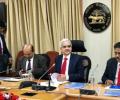
The fourth consecutive rate cut is expected to lower equated monthly instalments (EMIs) for home and auto buyers, and borrowing cost for corporate.

Global trends, macroeconomic data, and the outcome of the US Fed policy meeting are the major factors that will drive the movement in the domestic equity markets this week, analysts said. "In the upcoming data-centric week, the focus will be on crucial releases, including inflation data from India and the US. "Indian inflation is expected to rise, while US inflation will remain steady.

Retail inflation crossed the RBI's comfort level and rose to 5.21 per cent in December on increase in prices of food items.

The increase reflects a quarter-on-quarter increase of 2.6 per cent in October-December 2022-23. In absolute terms, the total liabilities, including liabilities under the 'Public Account' of the government, jumped to Rs 1,50,95,970.8 crore at the end of December 2022.

The 6-member Monetary Policy Committee, headed by Reserve Bank of India Governor Urjit Patel, in its fifth bi-monthly review, kept the repo rate unchanged at 6 per cent and reverse repo at 5.75 per cent.

Fitch Solutions sees RBI keeping benchmark interest rates unchanged during the fiscal to March 2022 following its decision to buy Rs 1 lakh crore of government bonds. "We had initially expected another policy rate cut to arrest the rise in government bond yields since the Union Budget announcement in February. "However, having an explicit bond purchase guidance from the RBI following the announcement of the G-SAP will also achieve a similar effect, if not even be more effective than a rate cut on capping the increase in bond yields," it said in a note. The Reserve Bank of India (RBI) held its policy repurchase (repo) rate unchanged at 4 per cent at its monetary policy meeting on April 7.
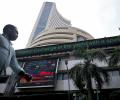
RBI policy, macro data, company earnings to decide market course this week: Experts

The Reserve Bank of India (RBI) on Friday kept the key repo rate unchanged at 4 per cent in view of rising inflation and faint signs of economic growth amid the gradual lifting of coronavirus related countrywide lockdown.
Tuesday's policy announcement had a regulatory and development component.

Five of the six external members had suggested that the central bank should reduce the policy rate.

While the economy seems to be on a firm growth path, the fight against inflation is not over yet. Shaktikanta Das seems to be in no hurry. After playing well through a five-year Test match, he doesn't want to get out hit wicket, observes Tamal Bandyopadhyay.

Acharya was one of the youngest deputy governors in the central bank's history and was in charge of the critical monetary policy department which also made him a part of the rate-setting panel.

Sahil Kapoor of Edelweiss Retail Capital Market Research says that setting up a monetary policy committee should have been the first step. And the central bank could have moved towards a formal inflation targeting mechanism after the processes and data sets are in place.

The Reserve Bank's rate-setting panel will start its 3-day deliberations on Wednesday amid expectations of yet another rate hike of 50 basis points to check high inflation, in line with similar actions taken by other major central banks, including the US Fed. Based on the recommendations of the Monetary Policy Committee (MPC), the RBI had effected 50 basis points increase in repo rate each in June and August after raising the short-term lending rate by 40 basis points in an off-cycle decision in May. The MPC, headed by RBI Governor Shaktikanta Das, is scheduled to meet during September 28-30.
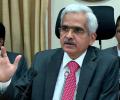
Das favoured shifting the stance of monetary policy from neutral to accommodative to send a clear signal, indicating that more measures could be taken in the near future to boost growth.

The Sensex jumped 412.23 points on Friday, braving heavy volatility during the day, amid the Reserve Bank of India maintaining status quo on the benchmark lending rate and buying in index heavyweights Reliance Industries Limited and ITC. The BSE Sensex climbed 412.23 points or 0.70 per cent to settle at 59,447.18. During the day, the benchmark hit a high of 59,654.44 and a low 58,876.36. The Nifty also gained 144.80 points or 0.82 per cent to finish at 17,784.35.
All-out efforts are needed to mitigate the adverse impact of the Covid-19 pandemic, and the RBI will use any instrument necessary to revive growth and preserve financial stability, according to the minutes of the central bank's policy meeting.
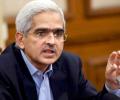
Reserve Bank of India (RBI) Governor Shaktikanta Das had stumped the market in the previous two policies - in August and in October - first with action and then with words. In August, it was the introduction of an incremental cash reserve ratio (I-CRR) to take out excess liquidity, which took the markets by surprise. In October, there was no action. Rather, what is known as "open mouth operation", Das' comment that the central bank might conduct open market operations (OMOs) by selling bonds tempered the euphoria in the bond markets after JP Morgan's inclusion of India in its Emerging Market Bond Index.

RBI governor is seen succeeding International Monetary Fund (IMF) chief executive officer, Christine Lagarde, next year.
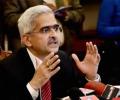
Amid prolonged uncertainty, continued policy support will be crucial for sustained economic recovery from the coronavirus pandemic, Reserve Bank Governor Shaktikanta Das said at the recent meeting of the Monetary Policy Committee. "In this period of prolonged uncertainty, it would be wise to remain agile and respond in a gradual, calibrated and well telegraphed manner to the emerging challenges," opined Das, according to the minutes of the MPC meeting released by the Reserve Bank on Thursday. Observing that economic recovery from the pandemic remains incomplete and uneven, he said, "continued support from various policies remains crucial for a sustained recovery." The governor said the renewed surge in international crude oil prices, however, requires close monitoring.

The finance ministry expects a broad-based moderation in inflationary pressures on the back of an anticipated reduction in food prices as a result of the uptick in summer sowing. The retail inflation rate remained stubbornly clung to the 5 per cent mark in seven of the past eight months. "Core inflation is trending downwards, indicating a broad-based moderation in price pressures... Driven by strong domestic growth and benign global commodity prices, core inflation is declining continuously.

A lot depends upon the composition of the monetary policy committee.
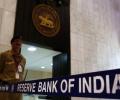
The RBI is not statutorily independent from the government but has long enjoyed wide latitude
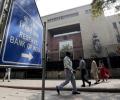
However, RBI would continue to nudge banks to cut lending rates

Rajan said that even though inflation has breached the 6 per cent mark as against the RBI target of getting it down to 5 per cent by March 2017, the price rise scenario will ebb in future

The cost of holding one-year forward dollars rose to 482.75 basis points from 472.75 bps on Tuesday.

Inflation in the 'fuel and power' basket in December slumped to 8.38 per cent, nearly half of 16.28 per cent.

The earlier high was in January this year at 5.07 per cent.

In the current fiscal so far, retail inflation stabilised around 5 per cent, while wholesale price-based inflation averaged around 2.9 per cent during April-December.
 © 2026 Rediff.com - Advertise with us - Disclaimer - Privacy Policy - Sitemap - Feedback - About us - Terms of use - Grievances